picking up where I left off
slow, quiet note no.72

I finished the sampler I took away with me - the one that I didn’t touch between take off and landing at Bristol airport.
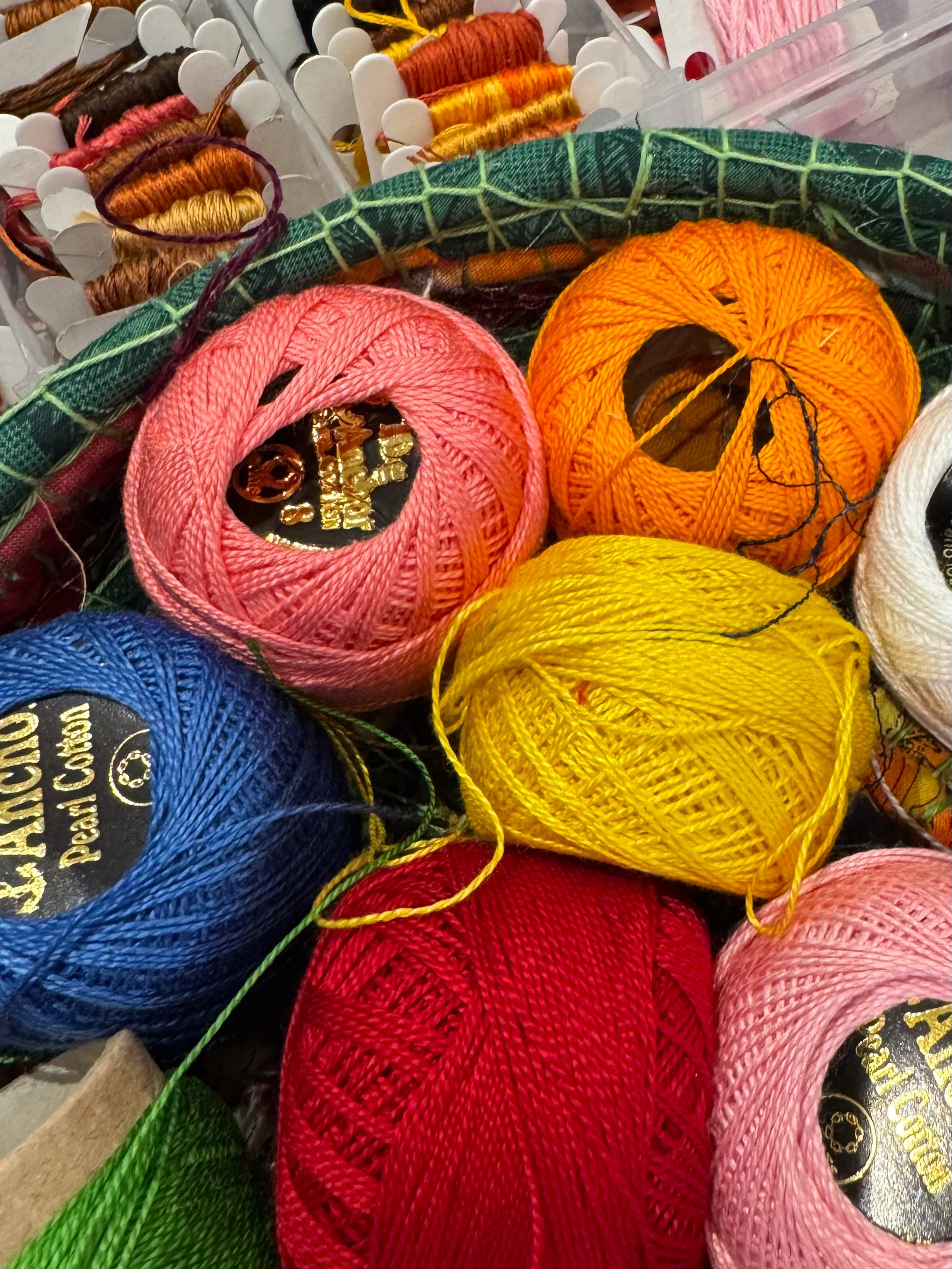
Progress, though, has been surprisingly swift in between various appointments and chores. I kept the sampler and sewing kit in the bag I packed it in which made it easier for me pick it up and put it down when the mood took me.
It felt good to fill the shapes one by one and I’ve been enjoying the light reflections across the individual stitches. If I’d stitched in green, it might give aerial field view or rural map but pink, I think, foregrounds the stitch marks and textures.
I still need to stretch and frame it but have a couple of weeks before the next term of Monday workshops begin. It will be a useful illustration of how it’s possible to draw directly onto fabric and create simple designs. I hope it will also offer a gentle encouragement to begin, sustain or return to a regular hand sewing practice.
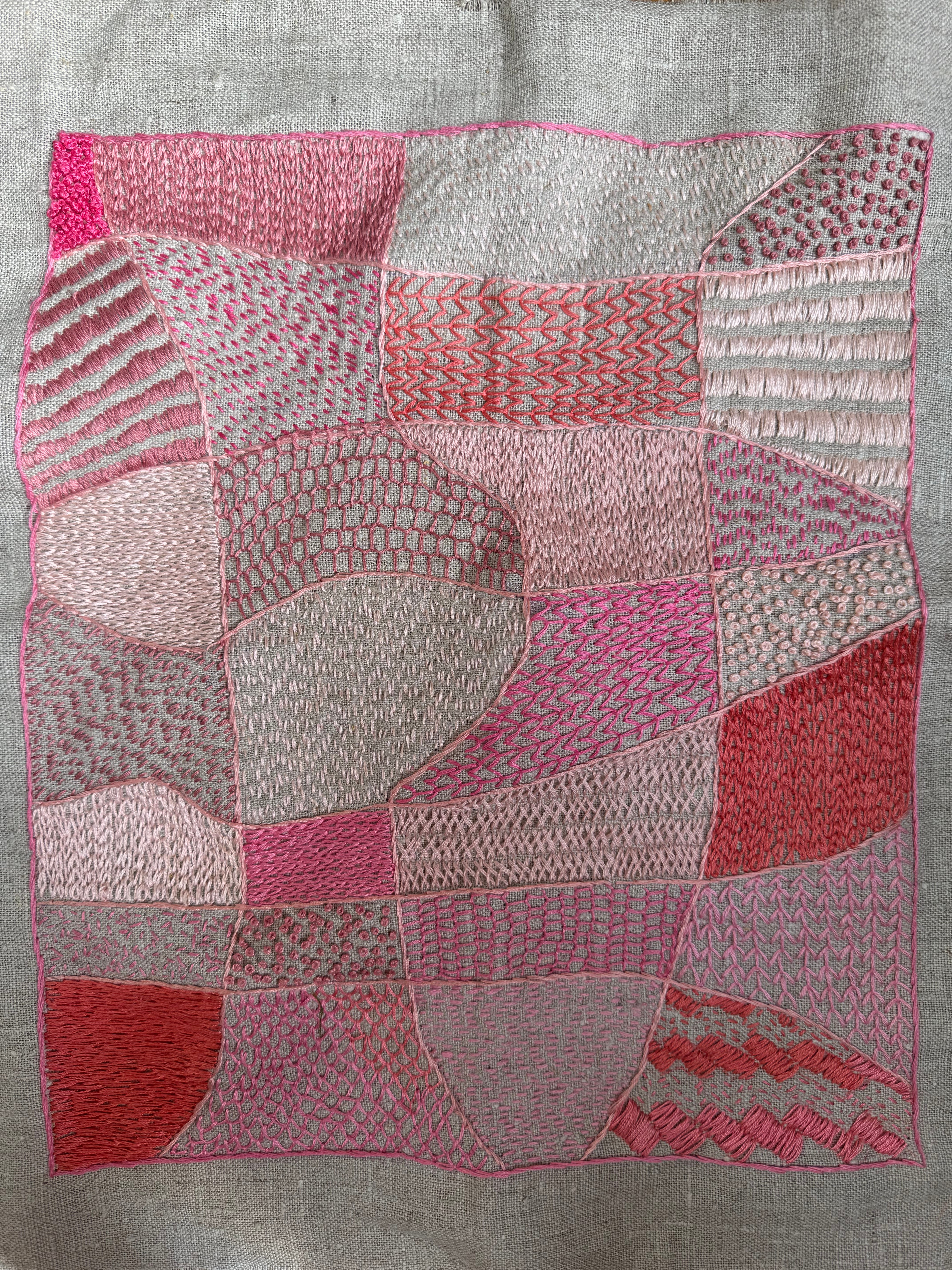
I began by drawing a straight edge outline and wavy horizontals and verticals directly onto the fabric. Covering them with stem stitch provided a distorted chequerboard pattern. The fabric panel is slightly bigger than an A4 sheet of paper and the shapes are just the right size for twenty or so minutes stitching at a time.
I could, of course, have drawn a ruled grid and created perfect squares or rectangles but I wanted to see how the filling stitches fitted within a few curves and points. I used embroidery floss, divided into three strands and worked most of the sections without an embroidery hoop.
Working by hand, for me, allows my mind to wander and I have an idea to make another similar panel, possibly larger, this time with curvier, sketchier lines. I’ve been collaging and drawing recently and some of those sketches might be good starting points for translation into stitch. I am sure I have a rectangular embroidery frame in the cupboard somewhere which would be useful to keep the fabric taught and avoid the gentle stretching that a hoop can cause.
One of the regular questions that comes up in workshops is how to carve out time for stitching and other creative textile practices.
The answer is not simple and depends very much on personal circumstances. I stitch most days but most is the key to that statement. This particular piece, for example, was begun over six months ago but I finished it by stitching every day for just over a week.
I am lucky enough to be able to carve out a bit of time to stitch most days but it might be in the morning with a cup of tea, it might be in the evening on the sofa. I might stitch in the garden or in the car and Thursday mornings usually find me stitching alongside friends and neighbours at our weekly meet up.
Deadlines for workshops and talks are becoming more frequent and when they arise I need to build in a couple of sessions, often a morning or afternoon, to work more consistently, probably at a desk, taking progress pictures and making notes for handouts or lesson planning. There is a routine but it’s a fluid one.
I also seem to stitch more frequently and make more progress on pieces when I bundle whatever I’m working on together with the needles, threads and scissors I’m working with. This sounds beyond obvious but having a project specific bag, basket or tray with everything I need for that particular piece of work avoids a frustrating ten minutes spent hunting for a particular thread or snips.
I’m brewing a longer post on this subject but, in the meantime, here’s a post from around this time last year about one of my first daily-ish stitch project and how I felt about it.
In between picking up new glasses, studio tidying, a mammogram (thank you NHS) and other day to day toings and froings this week, I’ve also been been appliquéing ever-smaller motifs and patches to what has now become a three metre long personal stitch dictionary.
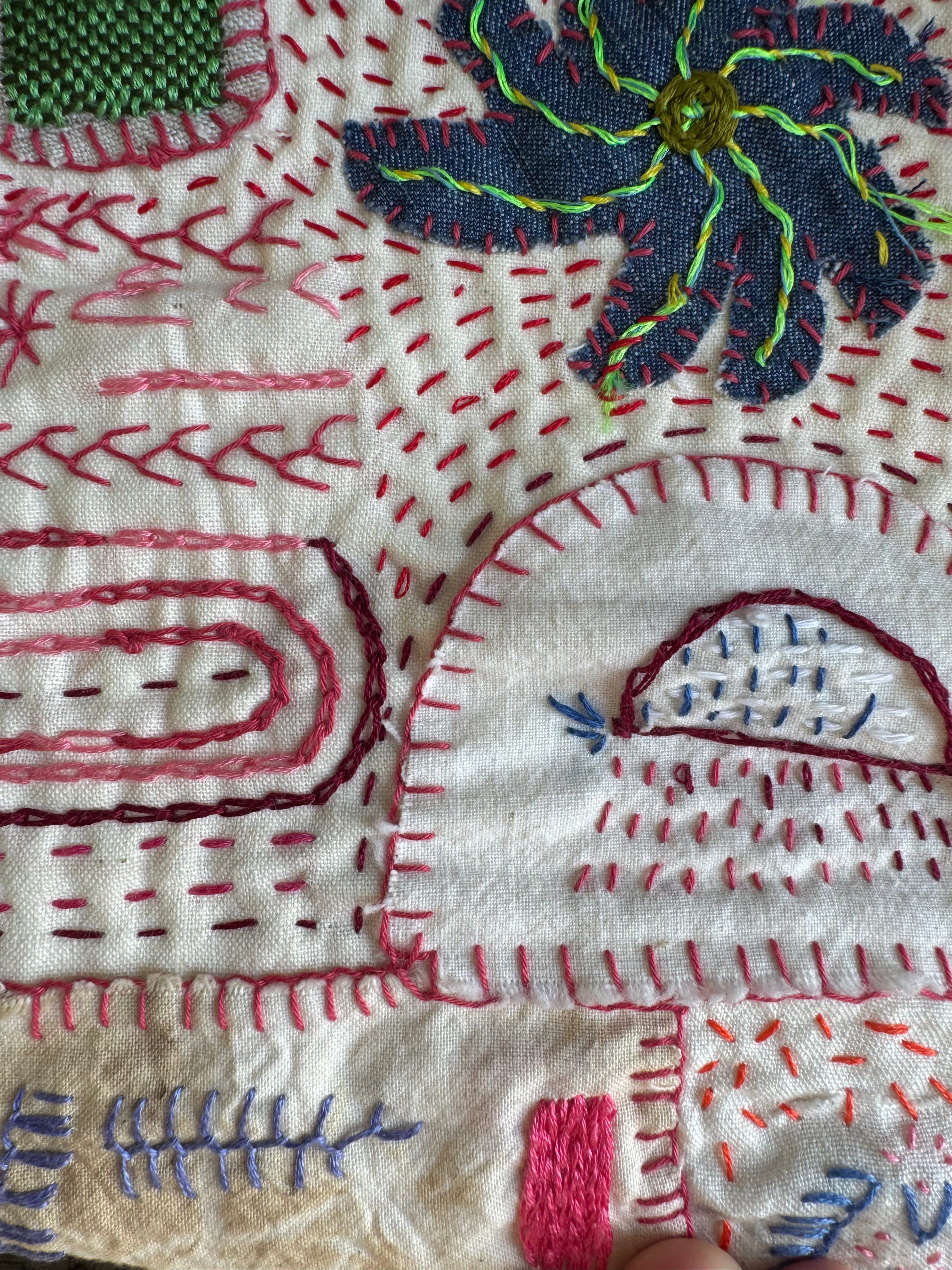
I’ve written about it a little in previous posts and notes and it is constructed from samples and demonstration pieces from workshops and teaching.
It is not a carefully considered planned piece of work and is peppered with mis-shapes, mistakes, knots and frays. I can see where I’ve abandoned particular stitches and moved on to show a different technique or where I have run out of a particular colour of thread. Nor is it chronological. I’ve kept almost every piece of fabric I’ve stitched on for over a year but in no particular order. These smaller needle weaves or motifs have been added haphazardly into the gaps and lines of feather, chain and blanket stitches.
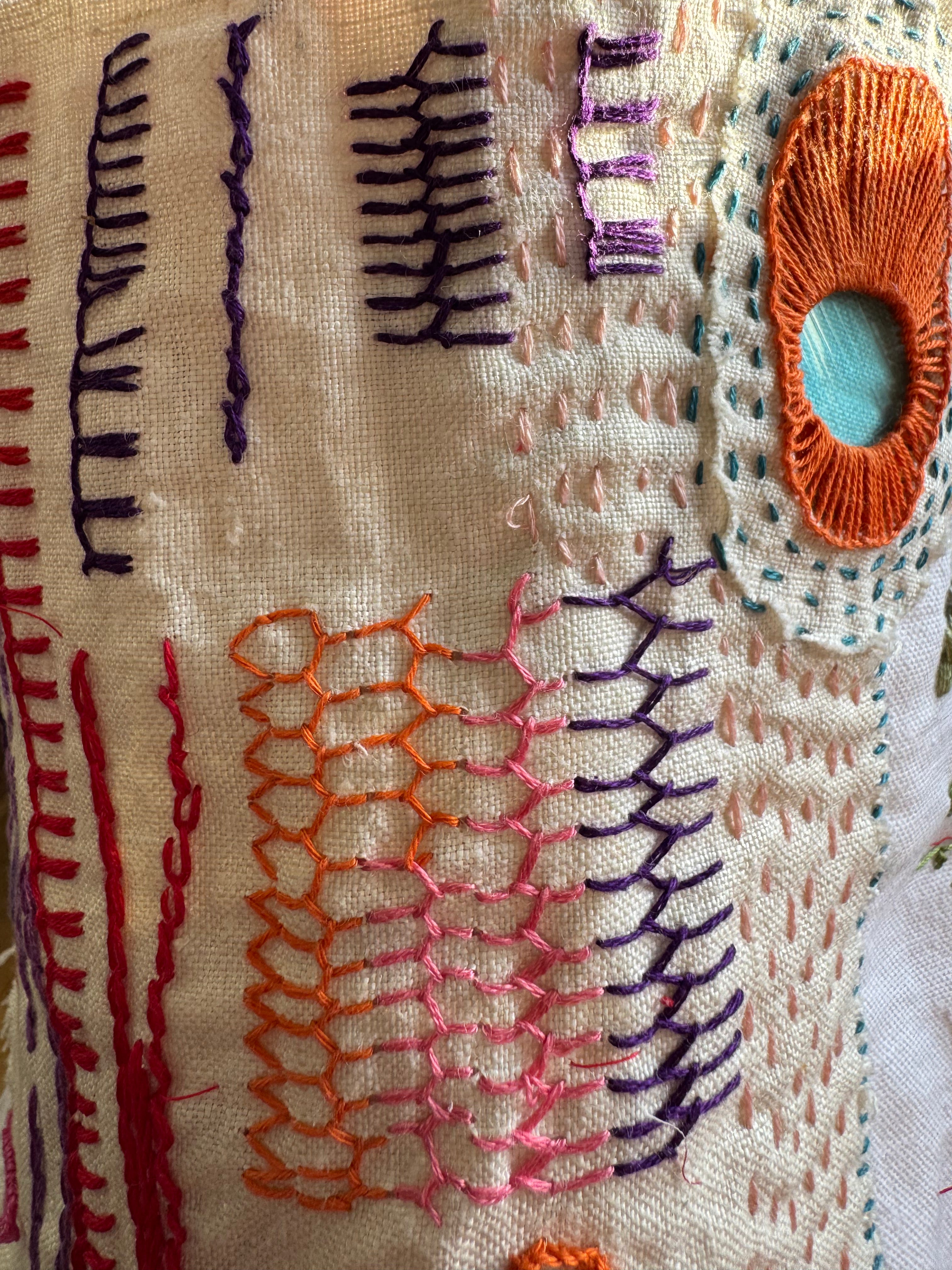
I might have, in hindsight, gathered and joined the various elements so that I could pull them all together into a more traditional book format but there’s a part of me that just wants to keep adding to it just to see how long it can get.
I accept it would be more suitable for a workshop or class situation if people could sit and flick through it but I like the action of rolling it out and deciding which section to work on and I think it would be more enjoyable for a group of people to look at together as a whole piece rather than turn pages one by one.
I am going to continue working with what I’ve got and use leftover threads to edge and outline the motifs. At some point I’ll start binding the edge but I’ll wait a little longer to decide on its final format.
Next week’s focus is workshop planning (see above) and I’m looking forward to spending a couple of days, pulling together handouts and samples. I find the process of pulling together an event a really useful way to review and reflect on my own work and it can sometimes signpost a new direction or possibilities.
I’ll leave you this week with a new addition to my book collection. As you may have gathered, when I’m not stitching, I’m often to be found reading around the subject. I am very excited as Thursday saw the arrival of ‘Sashiko: The Untold Story’ by Atsushi Futatsuya, as recommended by The People's Mending a few weeks ago.
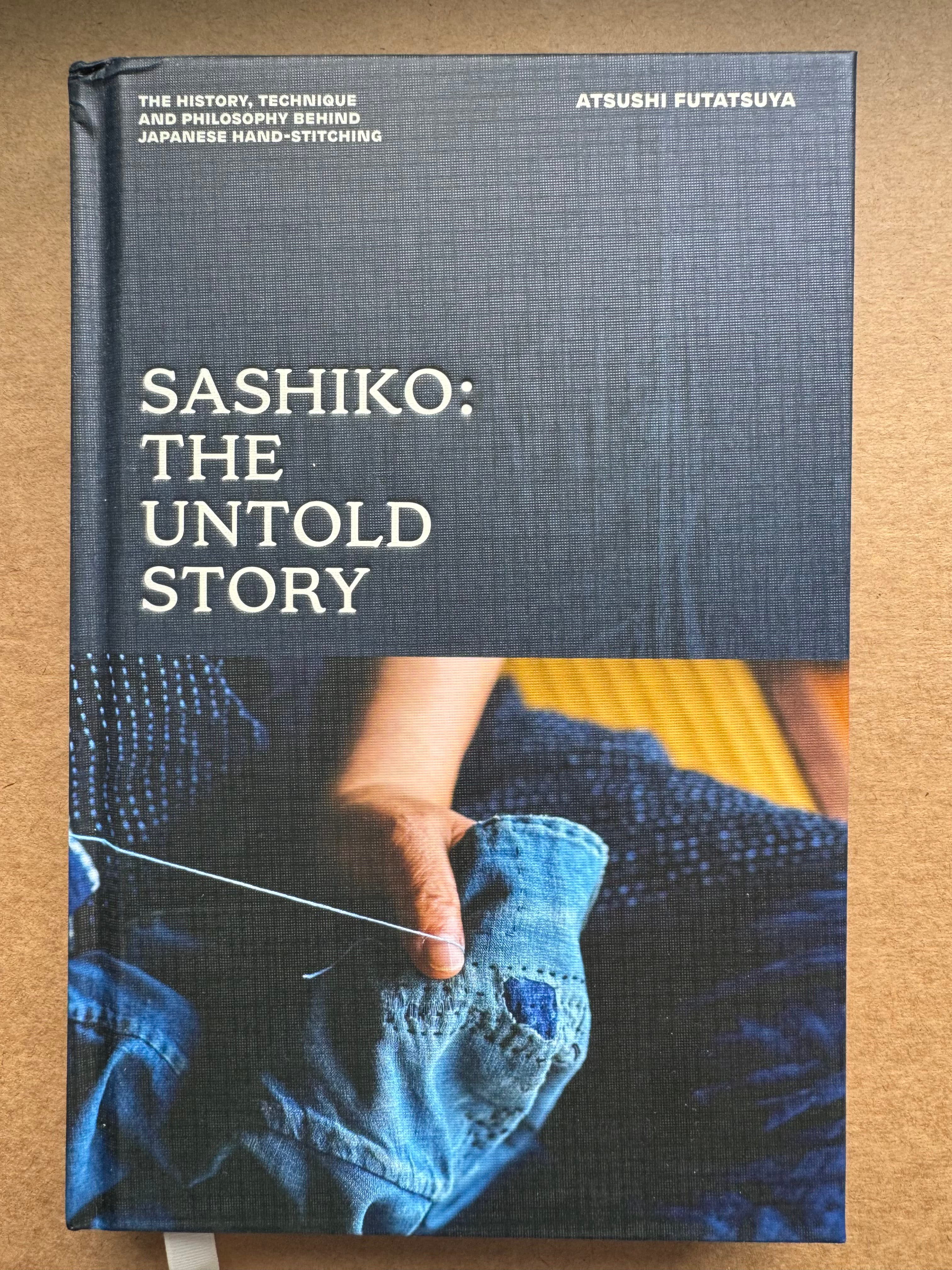
It is a beautifully produced publication and I’ve already highlighted several paragraphs before reaching Chapter One:
What you’ll read here is the Sashiko that existed long before it was curated, taught or showcased, practiced by people who never considered their stitching remarkable, because it was simply “part of life”. This is not the Sashiko of Pinterest boards or used as entertainment. This is the Sashiko that was once stitched silently for survival, when no-one thought to call it beautiful.
Thank you for taking the time to read this week’s slow, quiet note and welcome to those of you who have followed or subscribed recently - it’s great to meet you.
These weekly Sunday posts are free to read but if you would like to support my writing further, you could choose to buy me a coffee.
Or, alternatively, you can help me connect with other writers and artists here by simply taking the time to scroll down a little further to like, restack or share this post.
Have a great week!
Janice x